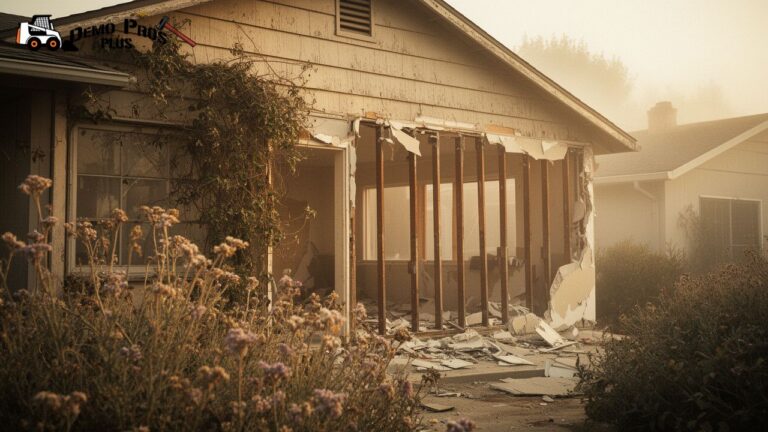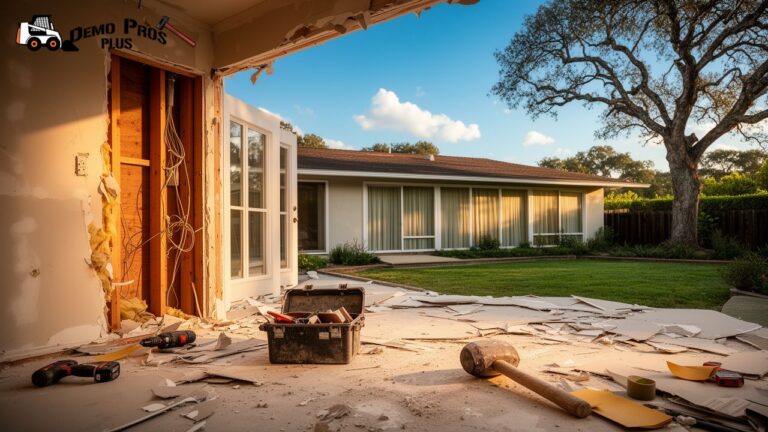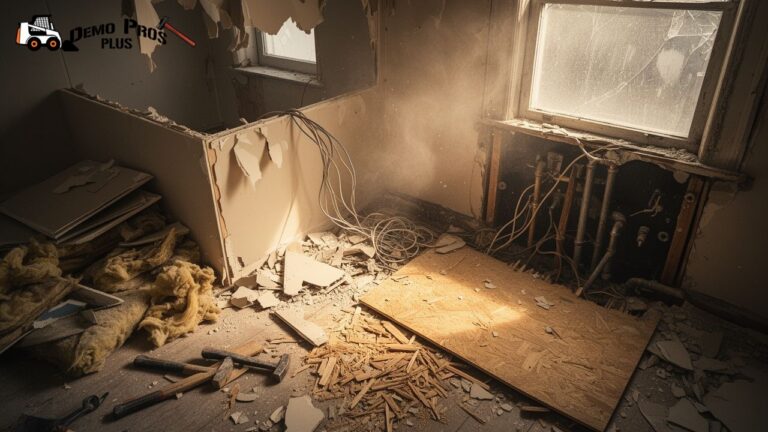

The national average house demolition cost per square foot in 2026 ranges from $5 to $17. For a standard 2,000-square-foot residential property, total expenses usually fall between $10,000 and $34,000. These figures include labor, heavy equipment operation, debris removal, and basic permit fees. While most mechanical teardowns stay within this range, properties with complex structural issues or hazardous materials can see rates climb significantly higher.
This guide provides a detailed look at the financial requirements for clearing a residential site. Understanding these costs helps property owners plan budgets effectively and avoid unexpected financial strain. Demo Pros Plus provides this data based on current market trends and years of field experience in the demolition industry.
Residential Demolition Averages by Project Type
Total expenses depend heavily on the method of removal. Mechanical demolition, which uses excavators and wrecking balls, is the most common and cost-effective approach. Deconstruction, or hand-stripping the house for salvageable materials, costs more because of the intensive labor required.
| Demolition Type | Estimated Cost Per Square Foot | Typical Project Duration |
|---|---|---|
| Mechanical Demolition | $5 – $15 | 2 – 5 Days |
| Partial Demolition (Interior) | $6 – $12 | 1 – 3 Days |
| Full Deconstruction (Manual) | $20 – $30 | 2 – 4 Weeks |
| Commercial Structure | $4 – $10 | 1 – 2 Weeks |
| Garage or Shed Removal | $8 – $15 | 1 Day |
The price for residential demolition cost per sq ft in 2026 reflects rising fuel costs and landfill tipping fees. A report by Forbes Home indicates that location remains one of the largest variables, with urban areas commanding higher prices due to permit complexity and limited equipment access.
Key Factors Influencing Project Expenses
Several variables change the final price of a project. A simple square structure on a flat lot costs much less than a multi-story building on a steep hillside.
Home Size and Total Square Footage
Total area is the most obvious factor. While the price per square foot often decreases slightly as the building size increases, the overall bill grows. Large homes require more hours of machine operation and more truckloads of debris hauled to the dump.
Structural Materials
The type of material used to build the house impacts the difficulty of the teardown. Wood-frame houses are the easiest and cheapest to demolish. Brick, stone, and concrete structures require specialized attachments for machinery, such as hydraulic hammers. These materials are also heavier, which increases disposal costs based on weight.
Site Accessibility
If heavy machinery cannot easily reach the house, costs rise. Narrow driveways, low-hanging power lines, or neighboring buildings in close proximity force operators to work more slowly and carefully. In some cases, small equipment must be used, which extends the timeline and increases labor hours.
Expense Breakdown for Debris Removal and Hazardous Materials
Once the physical structure is brought down, the focus shifts to the significant task of site clearance. Disposal fees account for a large portion of the total budget. Landfills charge by weight or by the truckload, and these rates vary by state. According to data from HomeAdvisor, debris disposal can represent 30% to 50% of the total project cost.
Asbestos and Lead Mitigation
Homes built before 1978 often contain lead paint or asbestos in floor tiles, insulation, and siding. Federal and state laws require professional testing and removal before demolition can begin. Asbestos abatement is a separate cost that can add $2,000 to $10,000 to the total bill, depending on the volume of material found.
Utility Disconnection
Every utility line must be capped and cleared before work starts. This includes electricity, gas, water, and sewer lines. Most cities require a signature from the utility company confirming the lines are safe. Some municipalities charge a fee for this inspection or for the actual capping process.
Bonus Tip: Check with local recycling centers before starting. Some facilities offer lower rates for “clean” loads of concrete, metal, or wood. Separating these materials on-site can reduce the average demolition cost per square foot by lowering landfill fees.
Permits and Local Regulations
No one should start a demolition project without the correct paperwork. City and county governments require demolition permits to ensure the safety of the public and the environment. Permit costs vary wildly. In small towns, a permit might cost $100. In major metropolitan areas, it could exceed $1,000.
Property owners must also consider environmental inspections. Some regions require a soil density test after the demolition to ensure the ground is stable enough for future construction. Failure to obtain these permits can lead to heavy fines and delays in rebuilding.
Strategic Considerations for Property Owners
Choosing a path for property clearance requires looking at more than just the lowest bid. The cheapest option might not include necessary tasks like site grading or utility capping.
- Verify Insurance and Licensing: Ensure the hired team carries general liability insurance and workers’ compensation. This protects the property owner from lawsuits if an accident occurs on-site.
- Determine the Scope of Work: Decide if the foundation needs to be removed. Removing a concrete slab or basement adds several thousand dollars to the project.
- Check for Salvage Opportunities: Some organizations accept donated building materials. Donating items like cabinets, windows, and doors can provide a tax deduction that offsets the cost to demolish a house per square foot.
- Review the Disposal Plan: Ask where the debris goes. Responsible contractors prioritize recycling over landfills, which is better for the environment and often cheaper.
- Assess the Timeline: Mechanical demolition is fast but messy. Deconstruction takes longer but preserves the land and materials.
Common Questions Regarding Demolition Costs
Many homeowners feel overwhelmed by the technicalities of removing a structure. Reviewing these common points of confusion can provide clarity.
Is it cheaper to burn a house down for fire department practice?
While some fire departments accept houses for training, this rarely saves money. The property owner must still remove all hazardous materials first and then pay to haul away the charred remains. Charred debris is often more expensive to dump because it is difficult to recycle.
Does the cost include the foundation?
Not always. Many quotes for professional house demolition services only cover the “above-ground” portion of the building. If the goal is to build a new home, the old foundation usually must come out. Always ask if the quote includes breaking up and hauling away the concrete footings and basement walls.
How do seasonal changes affect the price?
Winter demolition in cold climates can be more expensive. Frozen ground is harder to excavate, and snow removal adds extra labor. Working during the wet spring season can also lead to higher costs if the site becomes a mud pit, requiring extra gravel or stabilization to keep trucks from getting stuck.
Bonus Tip: Request a “not to exceed” quote. This type of agreement sets a maximum price for the project, protecting the homeowner from sudden price hikes if the contractor discovers unexpected underground pipes or old storage tanks.
Economic Landscape and Pricing for 2026
Market conditions in 2026 show that residential demolition experts are facing higher equipment maintenance costs. Parts and machinery prices have shifted the residential demolition cost per sq ft upward over the last few years. According to a study by Angi, labor shortages in the skilled trades also contribute to the current pricing structure. Hiring a local demolition company often saves money because they have shorter transport distances for their heavy equipment.
Important Information for Property Owners
Does insurance cover demolition?
Standard homeowners’ insurance does not cover the cost of a planned demolition. However, if a house is damaged by a covered peril like fire or a storm, the policy might include “debris removal” coverage. Review the policy details to see if any financial assistance is available.
How long does the process take?
The actual knockdown usually takes only a day or two. The total process, including permit approval, utility shutoffs, and debris hauling, typically spans two to three weeks.
Can I do the demolition myself?
While it is possible to rent a small excavator, DIY demolition is generally discouraged. The risks of hitting a live gas line or causing a structural collapse are high. Licensed demolition contractors have the experience to handle these risks safely.
What happens to the basement?
If the house has a basement, it must be filled after the walls are removed. This requires “clean fill” dirt, which is compacted in layers to prevent future sinking. This service is usually an additional cost not included in the basic square foot estimate.
Are there hidden fees?
Common hidden fees include silt fence installation for erosion control and street cleaning fees if trucks track mud onto public roads. Ensure these are discussed before work begins.
Summary of Key Takeaways
The average demolition cost per square foot is a flexible number based on material, location, and site conditions. Most projects in 2026 will cost between $5 and $17 per square foot. Mechanical methods remain the most efficient way to clear a lot, while deconstruction offers a sustainable but expensive alternative.
Property owners should prioritize safety and legal compliance by verifying permits and insurance. Taking the time to test for hazardous materials and secure utility caps prevents expensive delays and legal trouble. Always compare multiple detailed quotes to ensure the entire scope of the project is covered, from the roof to the foundation.
Contact Information for Site Evaluation
Selecting the right team is the most important step in any property clearance project. Demo Pros Plus offers extensive knowledge in residential and commercial teardowns. For a detailed discussion regarding a specific site or to request an estimate, reach out to Mike at (714) 605-1651. Inquiries can also be sent via email to mike@demoprosplus.com for prompt assistance. Experienced professionals ensure the job is handled safely and effectively.
Sources
- Forbes Home – Provides national cost averages and detailed breakdowns of demolition variables for residential properties.
- Angi – Offers expert analysis on the factors that drive labor and disposal costs in the construction industry.
- HomeAdvisor – Lists comprehensive pricing data based on actual project invoices and regional price differences.