Summarize with
A typical residential demolition project requires between two and four months from the initial planning stage to the final site grading. While the physical act of knocking down a structure with heavy machinery usually takes only two to five days, the preparatory work accounts for the vast majority of the schedule. Factors such as local government permit processing, hazardous material testing, and utility disconnection requirements dictate the overall speed of the project.
This guide provides a detailed look at each stage of the teardown process to help property owners plan their construction schedules accurately. Demo Pros Plus relies on years of field experience to explain why certain phases take longer than others and how to manage expectations when clearing a lot.
Administrative Requirements and Permitting
The administrative phase is almost always the longest part of the house demolition timeline. Local municipalities require specific permits to ensure the teardown meets safety and environmental codes. According to data provided by HomeAdvisor, obtaining these permits can take anywhere from two weeks to two months, depending on the efficiency of the local building department.
Property owners must submit a formal plan that outlines how the structure will be removed and where the debris will go. Some cities also require a tree preservation plan or a runoff management strategy before they issue a demolition permit. If the house is located in a historical district, the approval process might involve public hearings, which can add several months to the calendar.
Hazardous Material Inspections and Abatement
Before any walls come down, an environmental inspection is necessary to check for asbestos, lead paint, or other toxic substances. Regulations from the U.S. Environmental Protection Agency mandate that these materials be identified and safely removed before general demolition begins.
An inspector typically takes three to seven days to visit the site and provide a lab report. If the report finds asbestos in the flooring, insulation, or roofing, a specialized abatement team must remove it. This removal adds one to two weeks to the duration. Skipping this step is not an option as it protects the health of the neighborhood and prevents heavy fines from environmental agencies.
Bonus Tip: Schedule the hazardous material inspection as soon as the decision to demolish is made. Having the report ready when applying for permits can prevent delays later in the process.
Utility Disconnection and Capping
Service providers for electricity, gas, water, and sewer must officially disconnect and cap their lines at the street or property edge. This step ensures that the demolition crew does not accidentally cause a fire, explosion, or flood.
Utility companies often operate on their own schedules and might require two weeks or more to send a technician to the site. The gas company, in particular, often has strict protocols for “abandoning” a line, which involves cutting the pipe and sealing it underground. The physical demolition cannot start until the city receives letters of clearance from every utility provider involved.
Structural Demolition Phases
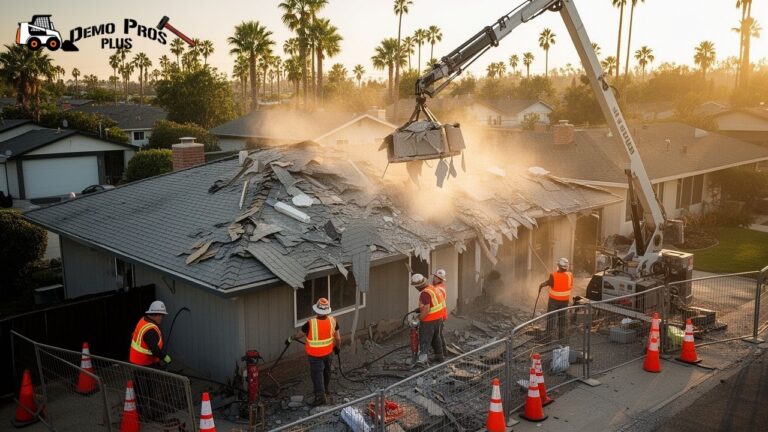
Once the permits are in hand and the utilities are safe, the heavy equipment arrives. This is the fastest part of the residential demolition duration. A standard 2,000 square foot home can be reduced to a pile of rubble in less than a week.
Mechanical teardown
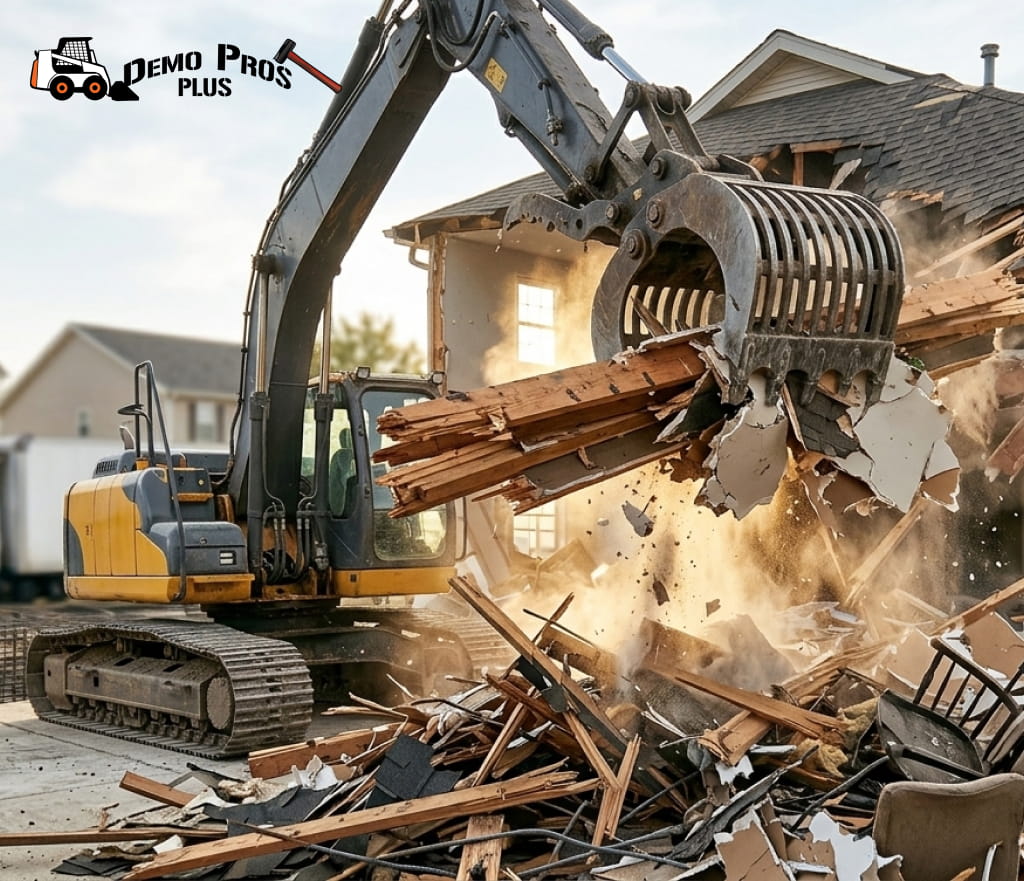
A hydraulic excavator usually handles the bulk of the work. The operator starts at the top of the house and pulls the structure inward to keep debris contained within the footprint of the building. This mechanical phase is focused on the controlled collapse of the frame.
Foundation removal
Removing the concrete slab or basement walls follows the initial teardown. Breaking up thick concrete requires specialized attachments like a hydraulic hammer or “ram hoe.” If the foundation is exceptionally deep or reinforced with heavy rebar, it will require additional effort and specialized machinery.
Site clearance and grading
The final step involves loading the debris into dumpsters or dump trucks and hauling it to a recycling center or landfill. After the site is clear, a bulldozer levels the soil to prepare it for future construction. This restoration leaves the lot ready for its next purpose.
Factors That Influence the Demolition Timeline
Several variables can either accelerate or hinder the speed of a teardown. Understanding these factors helps in creating a realistic house demolition time estimate.
| Phase | Estimated Duration | Primary Activities |
|---|---|---|
| Planning and Permitting | 2 to 8 weeks | Engineering surveys and city approvals |
| Utility Disconnection | 1 to 3 weeks | Capping gas, water, and electrical lines |
| Hazardous Material Removal | 1 to 2 weeks | Professional asbestos or lead abatement |
| Structural Teardown | 2 to 5 days | Heavy machinery operation and debris sorting |
| Site Restoration | 2 to 4 days | Debris hauling and soil grading |
Structure size and material
A small wood-frame house is much faster to demolish than a large brick or concrete structure. Brick and masonry require more effort to break down and are significantly heavier to haul away, which can increase the number of truck trips needed.
Weather conditions
Heavy rain can turn a demolition site into a mud pit, making it dangerous for heavy machinery to operate. High winds may also halt work to prevent dust and debris from blowing into neighboring properties. Demo Pros Plus monitors local forecasts to ensure that work happens during safe windows of time.
Site accessibility
If the house is located on a narrow street or a steep hill, the process slows down. Large trucks need enough room to turn around and park. If the excavator has limited space to maneuver, the operator must work more slowly to avoid damaging power lines or adjacent buildings.
Bonus Tip: Notify neighbors at least a week before the machinery arrives. Good communication can prevent complaints to the city that might result in temporary work stoppages.
Things to Consider Before Making a Decision
Before hiring a crew, property owners should evaluate several factors that impact both the timeline and the final result.
- Debris Management: Decide if you want to recycle materials. Sorting wood, metal, and concrete on-site takes longer but can reduce landfill fees and is better for the environment.
- Partial vs Total Demolition: If you plan to keep the foundation or specific walls for a remodel, the crew must use manual labor instead of heavy machinery for certain sections. This adds precision but also adds time.
- Neighboring Structures: If the house is very close to a neighbor’s property, the team may need to install shoring or protective barriers, which requires extra setup time.
- Septic and Wells: If the property is not on city services, the decommissioning of a septic tank or the sealing of a well involves specific health department permits and inspections.
Common Questions Regarding House Demolition
Can a house be demolished in one day?
While it is physically possible to knock down a small frame house in eight hours, the entire process, including foundation removal and debris hauling, is almost never completed in a single day. A realistic window for the physical work is three to five days.
Does the time of year affect the schedule?
Winter weather in colder climates can freeze the ground, making foundation removal much harder. Spring rains can create drainage issues on the cleared lot. Generally, late summer and early fall offer the most predictable conditions for a fast teardown.
How much of the house is recycled?
According to the National Association of Home Builders, many demolition contractors now divert a large portion of waste from landfills. Recycling metals, concrete, and certain wood products can lengthen the on-site sorting process by a day or two, but often lowers the total project cost.
Additional Frequently Asked Questions
Do I need to be present during the demolition?
Property owners do not need to be on-site while the machinery is operating. In fact, for safety reasons, it is usually better to stay away from the active work zone. A project manager handles the coordination of the crew and inspectors.
Will the demolition damage the driveway?
Heavy excavators and dump trucks can crack standard residential driveways. If you plan to keep the existing driveway, the contractor must use protective mats or smaller equipment, which might slightly increase the time required to move debris.
What happens if the crew finds a basement?
If a house has a basement that was not properly documented, it will take extra time to break up the thick concrete floor and walls. The hole must then be filled with engineered fill dirt and compacted in layers to ensure it is stable for a new building.
Are there noise ordinances I should know about?
Most cities restrict heavy machinery operation to specific hours, usually between 7:00 AM and 5:00 PM on weekdays. These limits mean the crew cannot work around the clock to finish a job faster.
Summary of the Demolition Process
The time to demolish a house is mostly spent on paperwork and safety preparations rather than the actual destruction of the building. Property owners should expect a total duration of several months when including the permitting and utility phases. The physical teardown is a small, high-energy portion of the overall project that usually finishes within a week. By understanding the administrative requirements and environmental checks, owners can manage their construction timelines with greater accuracy and avoid unexpected delays. Always verify local regulations early to ensure the project stays on track.
Expertise in Property Clearing
Demo Pros Plus provides comprehensive site preparation and demolition services. For questions regarding a specific project or to request a timeline evaluation, contact Mike at (714) 605 -1651. Inquiries can also be sent via email to mike@demoprosplus.com for a direct response. Demo Pros Plus focuses on providing accurate schedules and following all safety protocols to ensure every property is cleared efficiently and ready for its next use.
Sources
- HomeAdvisor – Detailed data on residential demolition costs and typical project timelines.
- U.S. Environmental Protection Agency – Official guidelines on hazardous material inspections and environmental safety during teardowns.
- National Association of Home Builders – Statistics and information regarding construction waste management and site preparation standards.