Summarize with
Concrete demolition requires selecting specific methods based on the structure’s thickness, the surrounding environment, and the desired precision. The primary techniques include mechanical breaking with heavy machinery, chemical expansion for vibration-sensitive areas, and hydro-demolition for selective removal. Successful projects prioritize dust mitigation, structural stability, and debris management to ensure a safe and efficient workflow.
This guide provides a detailed look at modern concrete removal methods and the standards required for professional execution. By understanding the mechanical and chemical properties of concrete destruction, project managers can better plan for timelines and safety requirements. Demo Pros Plus offers this technical overview based on years of field experience in residential and commercial environments.
Primary Concrete Breaking Methods
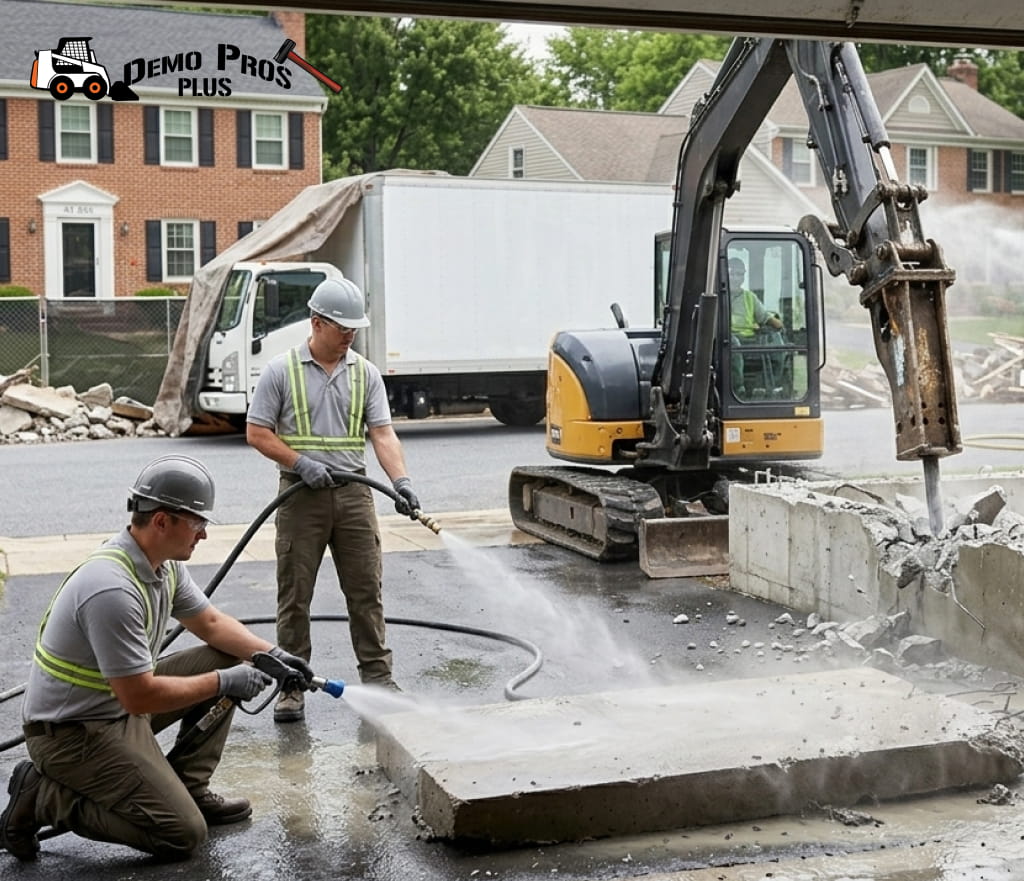
Mechanical demolition remains the most common approach for large-scale removal. This involves the use of handheld tools or heavy equipment to apply physical force to the concrete surface until it fractures. Handheld pneumatic or electric jackhammers work well for thin slabs or small patches of sidewalk. For larger foundations or reinforced structures, excavators equipped with hydraulic breakers provide the necessary force to shatter high-PSI concrete quickly.
Chemical demolition offers an alternative when noise and vibration must be minimized. This process involves drilling a series of holes into the concrete and filling them with an expansive grout. Over several hours, the grout expands and exerts thousands of pounds of pressure against the interior walls of the holes. This internal tension causes the concrete to crack without the loud impact associated with traditional hammering.
Hydro-demolition uses high-pressure water jets to strip away concrete. This technique is particularly effective when the goal is to preserve the underlying steel reinforcement. According to data from Verified Market Research, the demand for hydro-demolition is increasing globally because it prevents micro-fractures in the remaining structure. It is a preferred method for bridge deck repairs and parking garage restoration.
Bonus Tip for Clean Breaks
Before using a breaker, use a walk-behind concrete saw to score the perimeter of the demolition area. Scoring to a depth of at least one inch helps prevent cracks from traveling into sections of concrete that should remain intact.
Performance and Impact Comparison
The choice of method significantly affects the project timeline and the impact on the local environment. Factors such as noise, dust, and cost vary across different techniques.
| Method | Noise Level | Dust Production | Best Application | Relative Cost |
|---|---|---|---|---|
| Hydraulic Breaker | Very High | High | Large foundations and slabs | Moderate |
| Chemical Grout | Negligible | Very Low | Indoor or occupied buildings | High |
| Hydro-demolition | High | Low (Slurry) | Bridge decks and rebar preservation | High |
| Handheld Jackhammer | High | Medium | Driveways and small walkways | Low |
| Pressure Bursting | Low | Low | Thick walls and foundations | Moderate |
Because these methods involve high levels of energy and potential environmental impact, adhering to strict safety protocols is essential for every project.
How to Demolish Concrete Safely
Safety during concrete removal centers on managing physical hazards and respiratory risks. Concrete contains crystalline silica, which becomes airborne during cutting and breaking. The Occupational Safety and Health Administration mandates specific protection levels to prevent lung disease. Operators must use respirators and integrated water delivery systems to suppress dust at the source.
Structural stability is the second major safety concern. Before any demolition begins, a professional must inspect the site for load-bearing elements. Removing a concrete wall or column without proper shoring can lead to immediate collapse. Demo Pros Plus follows a strict protocol of identifying utility lines, including gas, water, and electricity, before any equipment touches the ground.
Bonus Tip for Dust Control
If a constant water supply is unavailable, use a HEPA-filtered vacuum attachment on handheld tools. This captures up to 99 percent of dust particles before they enter the air, keeping the job site cleaner and safer for everyone nearby.
The Concrete Removal Process
Once safety protocols are established, the physical removal process begins with site preparation. This includes clearing the area of debris and marking the boundaries of the demolition. After the concrete is broken into manageable pieces, the focus shifts to hauling and recycling. Modern construction standards emphasize sustainability. Statistics from Grand View Research indicate that the concrete demolition market is increasingly driven by the need to recycle old materials into new aggregate.
After breaking, the concrete pieces are loaded into dumpsters or dump trucks. If the concrete contains rebar, it must be separated. Many recycling facilities accept clean concrete for free or at a lower cost than mixed debris. This aggregate is often crushed and reused as a base material for new roads or buildings.
Things to Consider Before Making a Decision
Choosing a demolition strategy requires a balance of several factors. Decisions made during the planning phase dictate the overall success of the operation.
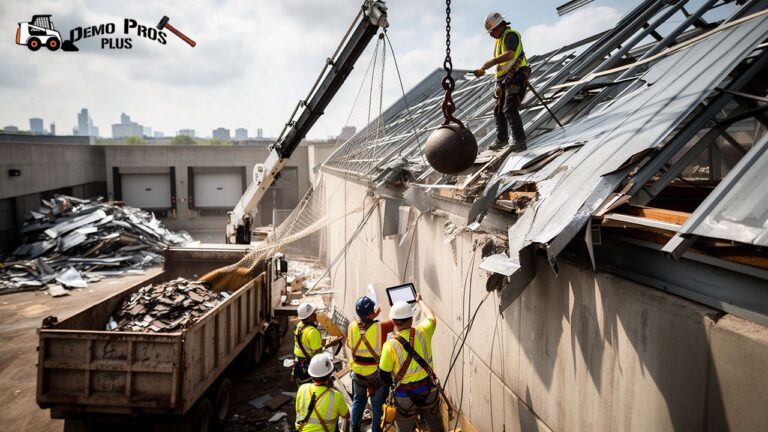
- Proximity to Other Structures: If the concrete is attached to a building that must remain standing, high-vibration methods like wrecking balls or large breakers might cause collateral damage.
- Access for Equipment: Large excavators require wide paths and stable ground. If the site is a basement or a confined backyard, handheld tools or chemical expansion are more practical.
- Local Ordinances: Many cities have strict noise bylaws. High-impact mechanical demolition may only be allowed during specific hours.
- Waste Disposal Requirements: Determine if the concrete is “clean” or if it contains contaminants like lead paint or oil. Contaminated concrete requires specialized disposal methods that increase costs.
Common Questions About Concrete Removal
Property owners often inquire about the expected speed and complexity of demolition. While a standard driveway might take a day to break and remove, a reinforced commercial foundation could take a week or more. The presence of steel rebar or wire mesh slows the process because it requires cutting torches or heavy-duty shears to separate the metal from the stone.
Another common inquiry involves the feasibility of DIY projects. While renting a jackhammer is possible, the physical toll and the risk of hitting underground utilities make it a difficult task for most. Professional teams possess the insurance and specialized equipment to handle unexpected issues, such as discovering buried storage tanks or old footings. The following section addresses specific technical concerns often raised during site evaluations.
Frequently Asked Questions
Can concrete be demolished without making any noise?
No method is completely silent, but chemical expansion is the quietest option. It involves drilling holes, which creates some noise, but the actual breaking of the concrete happens silently over several hours as the grout expands.
How do I know if my concrete has rebar?
Most structural concrete poured in the last several decades contains rebar or wire mesh for tension strength. You can use a high-end metal detector or a ground-penetrating radar (GPR) scan to locate the exact position and depth of the steel before you start.
Is it necessary to get a permit for concrete demolition?
Permit requirements vary by city and county. Generally, if the demolition affects a public sidewalk or involves a structural wall of a building, a permit is mandatory. Always check with local building departments before starting.
What happens to the concrete after it is removed?
Most concrete is taken to a crushing facility. There, machines break it into small stones used as “recycled aggregate.” This material is used as a sub-base for new driveways, parking lots, and roads.
How much vibration will occur during the process?
Mechanical breakers create significant ground vibration that can be felt in nearby structures. If vibrations are a concern for sensitive equipment or old masonry, hydro-demolition or chemical methods are better choices.
Final Recommendations for Concrete Projects
Concrete demolition is a technical task that demands a clear plan and the right tools. Start by assessing the site for hazards and checking local regulations regarding noise and dust. Match the technique to the specific needs of the environment, choosing lower-impact methods when working near occupied buildings. Always prioritize safety equipment and ensure a clear path for debris removal to keep the project on schedule. Evaluating the thickness of the material and the presence of reinforcement early will prevent delays and keep costs within the expected range.
Contact Demo Pros Plus for Expert Guidance
Demo Pros Plus provides comprehensive concrete removal and demolition solutions for a variety of project types. For detailed information on specific techniques or to discuss a planned project, contact Mike at (714) 605 -1651 or via email at mike@demoprosplus.com. Professional equipment and experienced operators ensure that every job meets safety standards and environmental regulations.
Sources
- Occupational Safety and Health Administration – Government agency providing safety standards for respiratory protection and silica dust management.
- Grand View Research – Market research firm providing data on the growth and trends of the global concrete demolition industry.
- Verified Market Research – Industry analysis source detailing the rise and technical benefits of hydro-demolition.