
Summarize with
Most homeowners pay between $10,000 and $20,000 to demolish a residential property. This range typically covers a standard 1,500 to 2,000 square foot house. On a per-square-foot basis, costs generally fall between $5 and $15. The final price depends heavily on the demolition method, the location of the home, and the presence of hazardous materials like asbestos or lead. While a small garage or shed might cost as little as $2,000 to remove, a large multi-story home with a basement can easily exceed $25,000.
This guide provides a detailed breakdown of the financial variables involved in clearing a lot for new construction or safety reasons. The information presented comes from years of hands-on experience in structural removal and site preparation. Understanding these costs helps property owners budget accurately and avoid unexpected expenses during the clearing process.
National Average Cost Breakdown
Total project costs change based on the specific type of structure and how much of it remains after the job. According to data published by Fixr, the national average for a full house demolition is approximately $15,000. This includes the heavy machinery, labor, and hauling fees required to move debris to a landfill.
Small-scale removals, such as mobile homes or single-story cottages, often sit at the lower end of the pricing scale. Large estates with extensive concrete foundations or masonry walls require more heavy equipment time and higher labor costs.
| Demolition Method | Average Price Range | Typical Timeline | Environmental Impact |
|---|---|---|---|
| Mechanical Demolition | $4,000 – $15,000 | 1 – 3 Days | High waste production |
| Partial Deconstruction | $10,000 – $20,000 | 1 – 2 Weeks | Moderate recycling |
| Full Deconstruction | $15,000 – $30,000 | 2 – 4 Weeks | High material recovery |
Primary Factors Affecting Total Price
Several variables dictate the final invoice. It is rarely as simple as a flat fee per house, as every lot presents unique challenges.
Size and Square Footage
Total area is the most obvious factor. Larger homes require more hours of machine operation and more trips to the dump. Because many landfills charge by weight, a brick or stone house costs significantly more to remove than a wood-framed structure of the same size. Demo Pros Plus suggests calculating a rough estimate by multiplying the total square footage by a regional average rate, which usually sits between $5 and $15 for standard suburban lots.
Location and Accessibility
City properties often carry higher price tags than rural ones. In dense urban environments, contractors must take extra precautions to protect neighboring structures. This might include hand-clearing certain sections or using smaller, more expensive equipment. Conversely, rural projects might face higher costs due to the distance machinery must travel to reach the site.
Hazardous Material Abatement
Older homes frequently contain asbestos in siding, floor tiles, or pipe insulation. A report from Angi indicates that asbestos testing and professional removal can add $2,000 to $5,000 to the total project cost. If lead paint is present, specialized disposal protocols must be followed, further increasing the labor and tipping fees at the landfill.
Bonus Tip: Always perform a hazardous material survey before any machines arrive on-site. Discovering asbestos mid-demolition can lead to heavy fines and immediate work stoppages.
Comparing Mechanical Demolition and Deconstruction
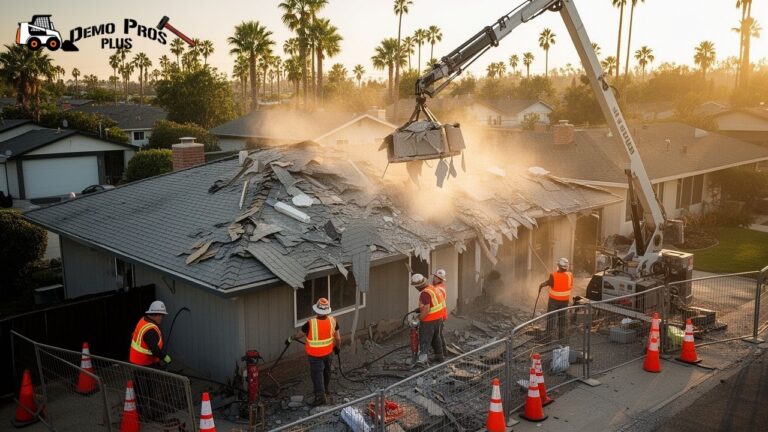
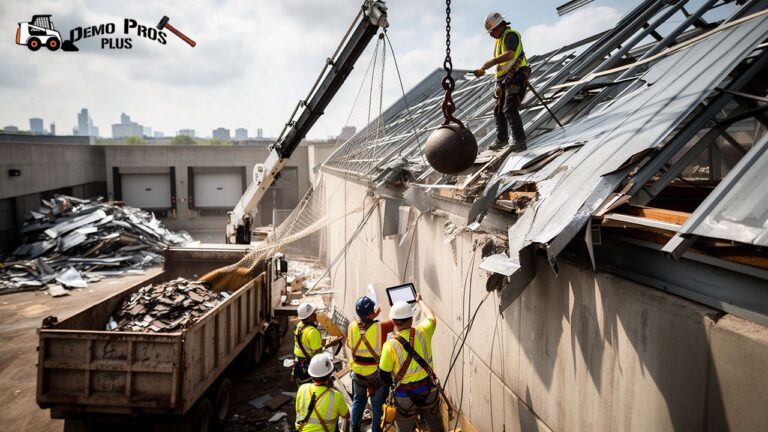
The choice between “smashing” and “disassembling” changes the budget. Mechanical demolition uses excavators and wrecking balls to level a building quickly. It is the most cost-effective path for most homeowners but results in the most waste.
Deconstruction involves workers taking the house apart by hand. This method prioritizes the recovery of valuable materials like old-growth lumber, ornate fixtures, and copper piping. While the labor costs for deconstruction are much higher, property owners may receive tax benefits for donating salvaged materials to non-profit organizations.
Foundation Removal and Infilling
Not every quote includes the removal of the foundation. Taking out a concrete slab or a full basement adds thousands to the bill. Once the foundation is gone, the resulting hole must be filled with dirt and compacted to prevent future sinkage. A study by HomeAdvisor shows that foundation removal alone can cost between $1,000 and $5,000 depending on the thickness of the concrete and the depth of the footings.
Permits and Regulations
Municipalities require permits to ensure the safety of the public and the environment. Permit fees vary by city and county. Some regions charge a flat fee of $400, while others calculate the cost based on the value or size of the structure.
Utility companies also charge fees to disconnect services. Electricity, gas, water, and sewer lines must be capped properly at the street or the main line. Failing to coordinate these shut-offs can lead to dangerous accidents and expensive repairs to city infrastructure.
Bonus Tip: Contact utility companies at least three weeks before the scheduled demolition date. Some providers require long lead times to send out crews for final disconnects.
Things to Consider Before Making a Decision
Before signing a contract, property owners should evaluate several logistical elements that impact the long-term success of the project.
- Tree Protection: Cities often have strict ordinances about protecting “heritage” trees during construction activity. Specialized fencing may be required.
- Salvage Value: Check if the house contains high-end materials like mahogany doors or vintage radiators. These items can be sold privately to offset demolition expenses.
- Sewer Capping: If the property will remain empty for a long time, the sewer line must be capped to prevent debris from entering the municipal system.
- Neighbor Relations: Structural removal is loud and dusty. Providing neighbors with a timeline helps prevent complaints and legal friction.
Common Questions
Does insurance cover the cost of demolition? Generally, standard homeowner insurance only covers demolition if a covered peril, such as a fire or storm, caused the damage. For a voluntary tear-down, the property owner typically pays the full amount out of pocket.
How long does the process take? A standard mechanical tear-down takes about two to four days from start to finish. This timeline includes the time spent loading debris into trucks and sweeping the site clean.
Can a homeowner do the work themselves? While tearing down a small shed is possible, residential house demolition requires heavy machinery and specific knowledge of structural load paths. Most cities require a licensed contractor to pull the necessary permits and execute the work.
Frequently Asked Questions
Do I need to remove the driveway too?
Not necessarily. Many people keep the driveway to provide a stable surface for construction vehicles during the subsequent build. If the driveway is cracked or in the way of the new footprint, it adds roughly $1,500 to $3,000 to the project.
What is a “tipping fee”?
This is the price charged by a landfill to accept the debris. These fees are usually calculated by the ton. If a house is full of heavy materials like brick or concrete, tipping fees will constitute a large portion of the total estimate.
Can I bury the debris on my property?
In almost all jurisdictions, burying construction debris is illegal. It creates environmental hazards and can lead to structural instability for future buildings. All materials must be hauled to a licensed disposal facility.
Does demolition include site grading?
Most standard contracts include “rough grading,” which means the lot is left relatively flat. Fine grading, which prepares the soil for landscaping or a new foundation, usually costs extra.
How do I handle a septic tank?
If the property has a septic system that is no longer needed, it must be pumped out and then either removed or crushed and filled with sand. This process ensures the ground does not collapse in the future.
Summary of Demolition Costs
Estimating the cost to tear down a house involves evaluating the structure’s size, material makeup, and location. While the average price sits around $15,000, specialized factors like asbestos or difficult site access can push that number higher. Mechanical removal remains the fastest and most affordable option, whereas deconstruction offers environmental benefits at a higher price point. Demo Pros Plus suggests that property owners always obtain a written estimate that clearly states whether permit fees, utility disconnects, and foundation removal are included. Evaluate your specific lot requirements and future building plans to choose the method that fits your budget and timeline.
Professional Demolition Assistance
When planning a residential project, working with an experienced team ensures the site is cleared safely and legally. For detailed information regarding structural removal or site preparation, contact Demo Pros Plus at (714) 605-1651. Inquiries can also be sent via email to mike@demoprosplus.com to discuss specific project needs and logistical requirements. Proper planning and professional oversight help maintain the safety of the property and the surrounding neighborhood throughout the clearing process.
Sources
- Fixr – A comprehensive breakdown of national house demolition averages and cost factors.
- Angi – An industry guide detailing the expenses related to permits and hazardous material removal.
- HomeAdvisor – Detailed data regarding foundation removal costs and regional pricing variations.