Summarize with
Removing an interior wall generally costs between $300 and $10,000, depending on the structural nature of the wall and the utilities hidden inside. For a standard non-load-bearing partition wall, you can expect to pay between $300 and $1,000. These walls do not support the weight of the roof or the floor above, making them simpler and faster to remove.
If the wall is load-bearing, the price increases significantly because you must install a support beam to maintain the structural integrity of the home. Removal of a load-bearing wall in a single-story house typically costs between $1,200 and $5,000. For multi-story homes, the complexity of transferring weight safely can drive costs above $10,000. This guide provides a detailed look at the expenses, safety protocols, and preparation required for a successful wall removal project.
Structural Differences and Pricing Impacts
The most significant factor in the total price is whether the wall supports the weight of the structure. Determining this requires a professional inspection. According to market data from Angi, homeowners often pay a premium for professional services when these critical structural changes are involved.
Non-load-bearing walls are often just dividers. Removing these involves stripping the drywall and pulling out the wooden or metal studs. Because these walls do not hold up the ceiling, you do not need to install temporary supports or permanent beams.
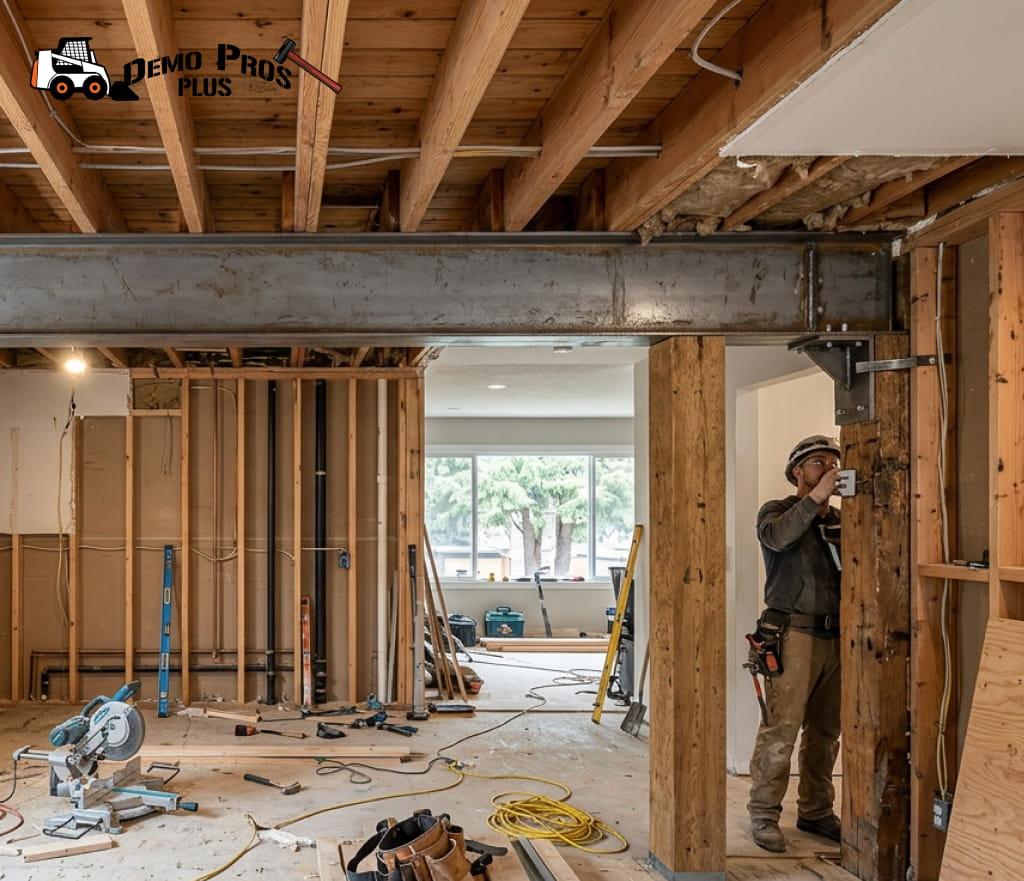
Load-bearing walls require much more preparation. Before you begin the safe house demolition process, a structural engineer must assess how much weight the wall carries. You will need to install a temporary support system to hold the ceiling in place while you remove the wall. Afterward, a permanent wood or steel beam must be installed to take over the weight-bearing responsibilities. Steel beams are more expensive than wood but can span longer distances without sagging.
Expense Breakdown for Labor and Materials
Labor accounts for the majority of the cost in demolition projects. Professionals charge for the actual demolition, the installation of support structures, and the rerouting of any utilities. You also need to account for the cost of a structural engineer and the required municipal permits.
A report from HomeAdvisor indicates that structural engineer consultations are an essential step to ensure the house remains stable, typically ranging from $300 to $700.
| Item | Estimated Cost (Non-Load-Bearing) | Estimated Cost (Load-Bearing) |
|---|---|---|
| Structural Engineer | Not required | $300 to $1,000 |
| Permits | $50 to $200 | $200 to $500 |
| Demolition Labor | $200 to $600 | $500 to $2,000 |
| Support Beam Materials | $0 | $500 to $2,500 |
| Debris Disposal | $100 to $300 | $200 to $600 |
| Drywall and Floor Repair | $300 to $1,000 | $500 to $2,000 |
| Total Estimated Cost | $650 to $2,100 | $2,200 to $8,600+ |
Utility Rerouting and Hidden Costs
Walls are often used as conduits for electrical wiring, plumbing pipes, and HVAC ducts. If you open a wall and find these utilities, the cost will increase. Moving a single electrical outlet might cost $100 to $300, but relocating a main plumbing stack or a large air return duct can add thousands of dollars to the budget.
Data from Fixr suggests that the average cost to remove a non-load-bearing wall that contains utilities is approximately $1,000 to $2,500. You must hire licensed electricians or plumbers to handle these specific tasks to ensure the work meets local building codes.
Residential Demolition Safety Guidelines
Safety is the most important part of any home renovation. Following residential demolition safety guidelines helps prevent injuries and structural failure. Before any physical work begins, you must confirm that all power to the wall is turned off at the circuit breaker.
If the home was built before 1978, there is a risk of lead-based paint. Additionally, homes built before the late 1980s might contain asbestos in the drywall joint compound or insulation. Demo Pros Plus recommends testing for these hazardous materials before you disturb any surfaces. Breathing in asbestos fibers or lead dust can lead to severe long-term health issues.
Safe House Demolition Process Step by Step
To understand how to safely demolish a house or an interior wall, you should follow a specific sequence. This prevents accidental damage to surrounding rooms.
- Site Preparation: Clear the area of furniture and cover floors with heavy-duty plastic or ram board. Use plastic sheeting to seal off the work area from the rest of the house to contain dust.
- Utility Disconnection: Shut off water, gas, and electricity. Use a non-contact voltage tester to verify that no live wires remain inside the wall.
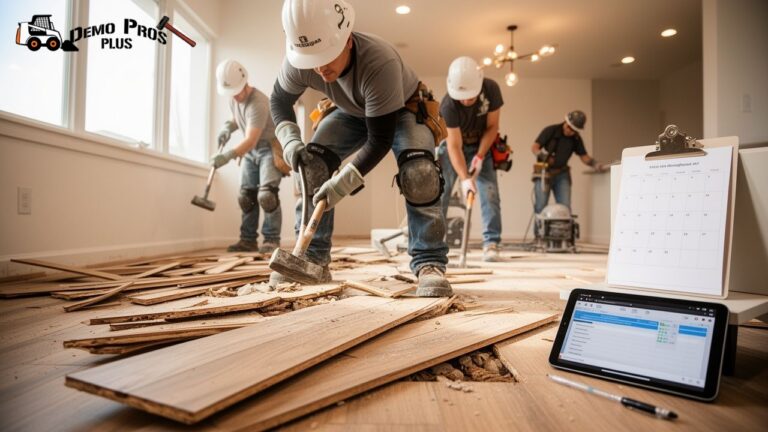
- Surface Removal: Remove baseboards, crown molding, and door frames. Use a pry bar and hammer to carefully strip the drywall. Avoid swinging a sledgehammer blindly, as this can damage pipes or wires.
- Structural Support: If the wall is load-bearing, install temporary jack posts and a header beam before removing any studs.
- Stud Removal: Cut the wall studs into manageable pieces and remove them from the top and bottom plates.
- Waste Management: Place all debris into a dumpster or heavy-duty bags immediately to keep the work area clear.
Bonus Tip: Use a “zipper wall” or a spring-loaded pole system to create a dust-proof barrier. This prevents fine drywall dust from settling in your kitchen or bedrooms.
House Demolition Safety Tips and Precautions
Professional teams follow strict demolition safety precautions to minimize risks. You should wear personal protective equipment at all times. This includes N95 masks or respirators, safety goggles, heavy-duty gloves, and steel-toed boots.
To further enhance safety, work from the top down. Start removing material from the ceiling level and work your way toward the floor. This prevents heavy sections of the wall from falling unexpectedly.
Always have a fire extinguisher nearby when working near electrical systems or using power tools that might create sparks. Maintaining safe demolition practices also means keeping the floor clear of nails and sharp debris. Pull nails out of wood as soon as the pieces are removed from the wall.
Things to Consider Before Making a Decision
Before you decide to knock down a wall, evaluate these factors:
- Floor Transitions: When a wall is removed, there will be a gap in the flooring. You must decide if you will patch the existing floor or install entirely new flooring across both rooms.
- Ceiling Repairs: The ceiling will also have a gap where the top plate of the wall used to be. Matching the texture of an old ceiling can be difficult and may require skim coating the entire room for a uniform look.
- Lighting Changes: Removing a wall often changes how light flows through a space. You might need to add new recessed lighting or move existing fixtures to balance the room.
- Resale Value: While open floor plans are popular, removing too many walls can reduce the number of private spaces or storage areas, which might affect the home’s value for some buyers.
Answers to Common Questions
Beyond the structural and financial considerations, homeowners often have questions about the practical timeline and legal requirements of the project.
For instance, a simple wall removal usually takes one to two days for the demolition phase, but the finishing work, like drywall and painting, can take an additional week.
Another common question involves permits. Most jurisdictions require a permit for any structural change. Even if the wall is not load-bearing, you may still need an electrical or plumbing permit if you are moving wires or pipes. Demo Pros Plus suggests checking with your local building department to avoid fines or issues when you eventually sell the home.
Expert Advice for Homeowners
Knocking down a wall provides an immediate change to the feel of a home, but it requires careful planning and a clear understanding of the costs involved. Always prioritize structural safety over aesthetic goals. If you are unsure about the nature of a wall, do not attempt to remove it yourself. Hiring a professional ensures that the house remains safe and that the final result looks seamless. Use the proper tools and follow all safety protocols to protect yourself and your property during the process.
Expert Support for Your Project
When you are ready to update your living space, Demo Pros Plus provides the expertise needed for a safe and efficient project. Professionals handle everything from structural assessment to debris disposal. Contact Mike at (714) 605-1651 or email mike@demoprosplus.com to discuss your specific needs. Relying on experienced help ensures that your home remains stable and that the work complies with all local safety regulations and building codes.
Sources
- Angi – A leading home services platform providing national cost averages for wall removal and construction labor.
- HomeAdvisor – A comprehensive resource for home improvement costs, specifically regarding structural engineering fees and permits.
- Fixr – A detailed cost guide for residential remodeling that breaks down expenses for utility relocation and material prices.