
Summarize with
The average price to demolish a house ranges from $8,000 to $25,000 for a standard single-family home. Most property owners pay approximately $15,000 to clear a 1,500-square-foot structure. On a per-square-foot basis, costs typically fall between $4 and $15. These figures include the actual teardown, debris removal, and basic site cleanup. The scale of the project dictates the final price; while small structures like detached garages or sheds might cost as little as $2,000, large estates or homes with significant hazardous materials can exceed $50,000.
Several variables influence the final bill, including the building size, the foundation type, and local landfill fees. This guide provides a detailed breakdown of the expenses involved in clearing a residential lot. Professional experience in the field confirms that accurate budgeting requires a look at everything from permit fees to utility disconnects.
Typical Price Ranges Based on Property Size
Total square footage is the primary driver for most estimates. Larger homes require more heavy machinery hours and result in higher disposal volumes. Materials also matter. A wood-frame house is generally cheaper to tear down than one built with brick or concrete because the debris is lighter and easier to handle.
The following data provides a general idea of what to expect based on common residential sizes.
| House Size (Square Feet) | Estimated Cost Range | Average Cost |
|---|---|---|
| 1,000 | $4,000 – $12,000 | $8,000 |
| 1,500 | $6,000 – $18,000 | $12,000 |
| 2,000 | $8,000 – $24,000 | $16,000 |
| 2,500 | $10,000 – $30,000 | $20,000 |
| 3,000+ | $12,000 – $45,000+ | $28,500 |
Building density also impacts these rates. Homes located in rural areas often have lower costs due to easier access for large equipment. In contrast, urban demolitions involve tighter spaces that require more precise, time-consuming work to avoid damaging neighboring properties. According to a cost guide from Forbes Home, total expenses vary significantly based on the specific demolition method chosen.
Primary Factors Affecting Total Expenses
While size is a major factor, other elements can quickly push a budget higher. Foundation removal is a common expense that requires technical consideration. Removing a concrete slab is relatively straightforward, but pulling out a full basement requires extensive excavation and backfilling with clean soil to prevent future sinkholes.
Geographic Location and Disposal Fees
Landfill tipping fees vary wildly across the country. In some regions, dumping a ton of debris costs $30, while in others it can exceed $100. Since a standard house generates dozens of tons of waste, these fees represent a significant portion of the total cost. Data published by Fixr indicates that disposal and hauling can account for 30% to 50% of the total project price.
Hazardous Material Abatement
Older homes often contain asbestos in floor tiles, insulation, or roofing. Lead-based paint is another common concern. Federal and state laws require specialized contractors to remove these materials before the main demolition begins. An asbestos inspection usually costs between $400 and $1,200. If hazardous materials are found, removal can add $2,000 to $10,000 or more to the total.
Bonus Tip: Check for local grants or environmental programs. Some municipalities offer assistance or reduced fees for properties that require significant environmental remediation before redevelopment.
Demolition Methods and Their Price Points
Property owners usually choose between two main ways to remove a structure: mechanical demolition and deconstruction.
Mechanical Demolition
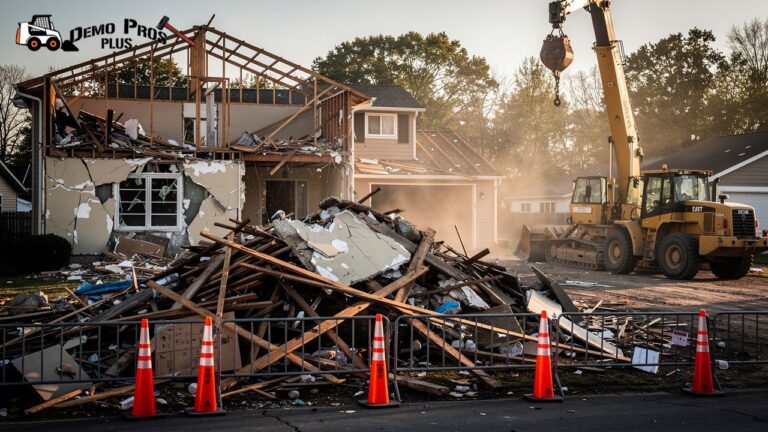
This is the fastest and most common approach. Contractors use hydraulic excavators and other heavy machinery to collapse the building and load the debris into dumpsters. This process for a standard home usually takes two to four days. It is the most cost-effective option for structures that do not contain many high-value, salvageable materials.
Deconstruction
Deconstruction involves taking the house apart by hand to preserve materials for reuse or resale. While this method is better for the environment, it is much more labor-intensive. It can cost two to three times as much as mechanical demolition. However, the value of salvaged materials like old-growth lumber, antique fixtures, or high-end appliances can sometimes offset the higher labor costs through tax receipts or direct sales.
Bonus Tip: If choosing deconstruction, look for local non-profit organizations that accept donated building materials. Donating these items can provide a substantial tax deduction that helps recover part of the project cost.
Administrative and Site Preparation Requirements
Before the first wall comes down, several administrative steps must happen. Ignoring these can lead to heavy fines or project delays. Typically, these requirements include the following steps:
- Permits: Most cities require a specific demolition permit. Fees range from $50 to $1,000 depending on the location and the value of the project.
- Utility Disconnects: Gas, water, and electricity lines must be capped or removed at the street. Utility companies often charge for these services.
- Silt Fencing: To prevent soil erosion and runoff into local storm drains, contractors must often install silt fences around the perimeter of the site.
- Tree Protection: Some cities have strict ordinances regarding the protection of mature trees during construction or demolition activities.
A report by HomeAdvisor notes that permit requirements and inspections vary by municipality, making it necessary to consult local building departments early in the planning phase.
Things to Consider Before Making a Decision
Preparation is the key to avoiding unexpected bills. Before signing a contract, property owners should evaluate several practical points.
- Total Site Clearance: Ensure the quote includes the removal of the driveway, walkways, and any underground septic tanks or oil tanks.
- Neighboring Structures: Determine if the demolition will impact shared walls or fences. Close proximity to other buildings might require manual labor instead of heavy machinery.
- Future Use of the Land: If a new house is going up immediately, the soil must be compacted correctly. Demolition contractors need to know if the lot needs to be “build-ready.”
- Access Issues: Narrow streets or low-hanging power lines can prevent large dumpsters or excavators from reaching the property. Smaller equipment might be necessary, which increases the time and labor cost.
Common Questions About House Demolition
Can I demolish a house myself? While technically possible for some outbuildings, professional house demolition is recommended for safety and legal reasons. The process involves heavy machinery, high-voltage electricity, and complex waste management laws. Most cities require a licensed contractor to pull the necessary permits.
How long does the entire process take? The physical teardown usually takes a few days. However, the entire timeline, including permit approval, utility disconnection, and final site grading, often spans three to six weeks.
Does insurance cover house demolition? Standard homeowners insurance generally does not cover the cost of a planned demolition. However, if a home is destroyed by a covered peril like fire or wind, the policy may include “debris removal” coverage to help pay for clearing the lot.
Frequently Asked Questions
Is it cheaper to burn a house down for fire department training?
While some fire departments accept donated structures for training, this is rarely a free or cheap option for the homeowner. The property owner must still pay for asbestos abatement, remove the foundation afterward, and clear all charred debris. Many departments also require the owner to pay for the permits and oversight.
Does the foundation have to be removed?
If the goal is to build a new structure, the old foundation usually must come out to avoid interfering with new footers and utilities. While some local codes allow concrete to be broken up and buried deep underground if the land will remain open space, this practice is becoming less common due to modern environmental and building regulations.
How much of the house can be recycled?
A significant portion of a house can be recycled. Asphalt shingles can be used in road work, while concrete and brick can be crushed for road base. Metal piping and wiring have high scrap value. Demo Pros Plus suggests that recycling as much as possible can lower disposal costs by reducing the total weight of debris sent to the landfill.
Do I need a neighbor’s permission to demolish my house?
Technically, no, provided the work is done within the property lines and follows all local codes. However, most cities require notifying neighbors before work begins. It is also good practice to document the condition of neighboring structures before starting to avoid false damage claims later.
Final Thoughts on Demolition Costs
Estimating the cost to clear a lot involves more than just calculating square footage. While the $8,000 to $25,000 range covers most residential projects, the specific details of the site determine the final price. Property owners should focus on thorough site inspections for hazardous materials and clear communication with utility companies. Selecting a contractor who handles both the teardown and the administrative permits often streamlines the process. Demo Pros Plus recommends obtaining at least three detailed bids to ensure the scope of work covers everything from the roof to the foundation. Proper planning ensures the lot is left clean and ready for its next purpose.
Ready to Start Your Project
Starting a demolition project requires a clear plan and a professional team. Demo Pros Plus provides the expertise needed to handle residential teardowns safely and efficiently. Whether the project involves a small cottage or a large family estate, the focus remains on safety and environmental responsibility. To discuss the specific needs of a property or to receive a detailed estimate, contact Mike at (714) 605-1651 or via email at mike@demoprosplus.com.
Sources
- HomeAdvisor – A detailed guide on national averages and factors that influence the cost of house demolition.
- Fixr – An analysis of demolition costs including material types, labor, and regional price variations.
- Forbes Home – An authoritative look at the different methods of demolition and associated expenses for homeowners.