
Summarize with
Removing an old roof from the deck, or even down to the rafters, is a larger task than it may appear on the ground. It’s physically difficult, generates huge amounts of rubbish, and has actual safety hazards if the crew is unaware. Companies like Demo Pros Plus are more experienced in roof demolition projects of this sort, and when property owners have a good understanding of how it’s done, they can set a realistic budget and avoid any unpleasant surprises during the project.
The National Roofing Contractors Association publishes standards and contractor qualifications that are worth reading before hiring anyone for a project this size. A roof demolition isn’t just stripping shingles off in an afternoon. It’s a phased job with its own tools, its own safety rules, and disposal requirements that catch a lot of homeowners off guard.
How Roof Demolition Works
Each time a roof demolition is performed, it will be down to the deck or, if the project requires it, all the way to the structural frame. A full strip to the rafters is logical where the sub-decking has decayed or has absorbed water. If the sheathing is not compromised, it is okay to stop at the deck.
A typical roof demolition project removes asphalt shingles or tile, underlayment, insulation, and roofing felt, and may remove decking. The roof on a commercial building presents a real challenge to a roofing crew: membrane type, gravel ballast, tapered insulation boards, and drainage systems that the residential roofing crew is not accustomed to working with.
The size of the crew and the equipment increase or decrease in accordance with the size and condition of the building. As a property owner, you can expect a more realistic timeline and budget if you understand how roof demolition works.
The Complete Roof Demolition Process
A well planned roof demolition process goes in an ordered sequence; if a step is missed, then there is risk, damage to the structure, or delay as the project continues.
Stage One: Preparation and Roof Demolition Safety
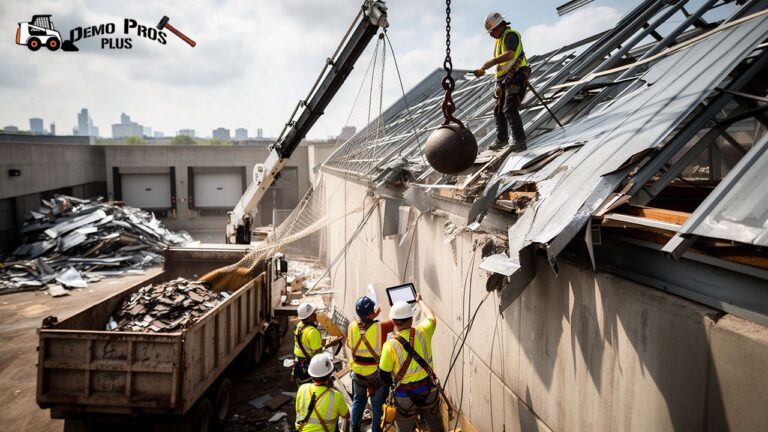
Nothing will be brought to the roof surface until it is ready. Roof demolition safety measures before climbing the ladder include perimeter barriers, staging areas at calculated drop points, or a structural inspection for potential hazards like damaged or rotten wood that, left unchecked, could collapse while people are working on it. Debris chutes are essential for removing the removed roof material safely.
Worksite Safety and Equipment Used are considered: Hard hats, slip-resistant shoes, fall arrest systems, and eye protection. Fall protection is required by OSHA for roofing on a residence if the roof is 6 feet above another level.
Before anyone begins removing any shingles, clear paths should be established and utilities that are located near or above the structure identified.
Crews also check for hazardous materials before a roof demolition gets underway. Homes built before 1980 sometimes have asbestos in older flat roofing products or asphalt materials. If asbestos is suspected, a licensed inspector has to sample and test it in a lab before tear off begins. Disturbing asbestos containing material without proper containment violates federal regulations under the National Emission Standards for Hazardous Air Pollutants.
Stage Two: The Roof Removal Process
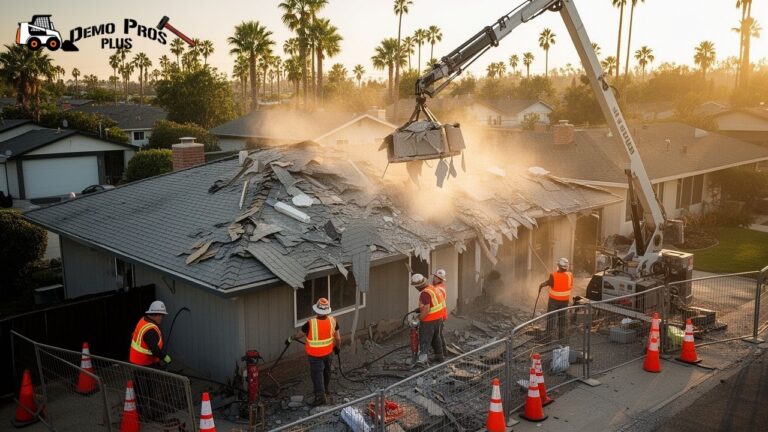
Site preparation is followed by removal, typically beginning at the ridge and moving down. Every roof removal process is similar: the roof is removed in sections with a roofing fork or a flat bar, and the shingles are carried down chutes into containers below.
A crew of 4 to 6 people can strip as many as 1,500-2,000 square feet of asphalt shingle roofing in one day. Tiles will take longer as they are heavier and harder to drop, and will crack under the decking. Metal roofing panels also pose a challenge in that the fasteners should not be removed using a tool that can damage the underlying structure. Once the crew gets into a rhythm, the roof is usually on the fast track at this stage of the roof demolition.
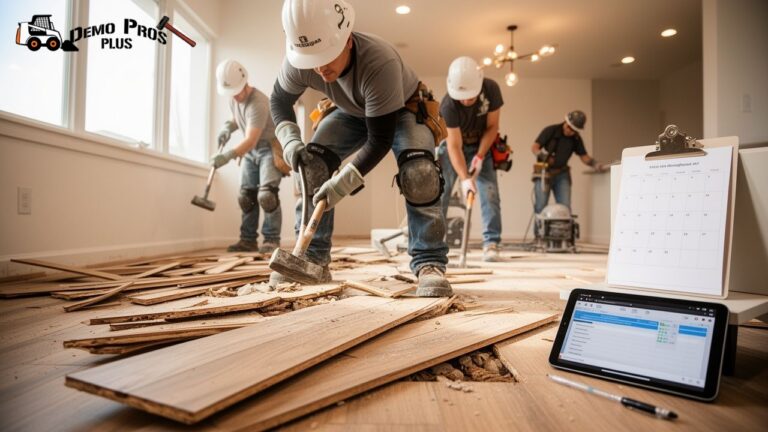
Underlayment and then the rest of the layers are next. When the job requires the removal of the decking, workers can work between the rafters and pry up and cut sections of plywood or oriented strand board without compromising the strength of the frame.
Stage Three: Roof Demolition Waste Removal Cleanup
Roof demolition waste removal is one of the most underestimated logistical challenges in the entire operation. Roofing material is heavy. Each square of asphalt shingles is 250 to 400 pounds, and a typical home roofing project creates a few tons of waste that needs to be removed from the site and disposed of correctly.
Roofing Material Disposal
Most stripped shingles, underlayment, and old decking go straight to a construction landfill. Some municipalities require roofing waste to be separated from general construction debris rather than mixed.
Asphalt shingles can be recycled in several markets, and programs that grind old shingles into paving aggregate are expanding in larger metro areas, though the national recycling rate for residential roofing material is still fairly low.
How a roof demolition crew handles disposal often comes down to local landfill rules and whichever recycling programs happen to serve that area. Contractors typically rent roll off dumpsters for the length of the project, and dumpster rental and hauling fees are sometimes built into the overall roof demolition quote and sometimes not. Ask directly whether waste removal is included before signing anything.
Environmental Rules
Lead and asbestos carry separate disposal rules, regulated at both the state and federal level. If hazardous material turns up during the assessment, a certified abatement contractor has to remove and dispose of it before standard roof demolition work can resume. Some states also require a permit that includes documentation of a hazardous material survey.
The U.S. Environmental Protection Agency’s Sustainable Materials Management program includes classification, management, and recycling of construction and demolition waste in some instances to prevent disposal in landfills.
Comprehensive cleanup involves sweeping the yard for loose nails, sweeping the yard for loose debris, and cleaning out gutters, downspouts, and any nearby structures for debris that may have fallen in.
What Affects Roof Demolition Cost
Depending on the roof size, roof material, access to the roof, and labor costs in the region, roof demolition costs vary. The average roofing demolition cost is estimated to be $1 to $5 per sq. ft. just for labor without disposal or new materials. For homeowners planning a larger demolition project, a house demolition cost guide can also help explain how broader demolition expenses may differ from roof-specific costs.
This translates to labor costs of somewhere between $1,500 and $7,500 for about 1,500 square feet of roof surface area. Add to the cost of the house and land, depending on local tipping fees and distance to disposal, the additional expenses of $300 to $600 on a typical single family home.
| Material Type | Estimated Cost per Square Foot |
|---|---|
| Asphalt Shingles | $1 to $3 |
| Clay or Concrete Tile | $3 to $7 |
| Metal Roofing | $2 to $5 |
| Built Up Flat Roofing | $2 to $4 |
| Wood Shake | $2 to $5 |
Pitch matters more than most people expect going in. A 4:12 pitch is manageable for most crews without extra rigging. Anything steeper than 7:12 requires harnesses, roof anchors, and more setup time, and all of that pushes the rate up.
Multiple layers of old shingles raise the cost as well. A lot of older homes have two or three layers stacked on the original roof, and each one adds labor and disposal volume on top of a base roof demolition rate. Some contractors charge a separate fee per layer for exactly this reason.
Choosing a Roof Demolition Contractor
Not all online roofers are able to do a roof demolition properly. The right roof demolition contractor can be as much about permits, insurance, and a written estimate that provides all costs up front, as it is about the right contractor.
Credentials, Permits, and Insurance
Most areas require a permit for roof demolition work, especially on commercial buildings or jobs involving hazardous materials. A contractor who does this will embed permitting into the process, without having to be asked to.
If someone tells you that you don’t need to get a permit because it will be time-consuming or expensive, ask yourself if they are being truthful and take it as a red flag. Work that is not on the list may cause serious issues further down the line, especially if the property is later put on the market for sale.
Check that the contractor has general liability insurance and workers’ compensation coverage. If there is no workers’ compensation, then the property owner may be held liable for an accident that takes place on the property. Request certificates of insurance and check them directly with the insurance provider before the project, not after project completion.
Questions to Ask Before You Hire
Request multiple roof demolition quotes to verify their price. Labor, waste removal, permit, and other fees associated with extra shingle layers and hazardous material discovery should all be spelled out in each estimate.
Inquire about the crew and the time frame. Typical roof demolition on a 2,000 sq.ft. residence consumes one to two days, and is normally completed with a well-trained crew of 2 to 3. When a contractor responds with a fuzzy answer on how many people will be on the project or the expected timeframe, they are likely to understaff the project and extend the schedule, increasing the risk of shortcuts.
Check references from recent jobs of similar size and scope. Past clients’ reviews can guide, but nothing beats a genuine chat with them in order to give you a feel for the service and whether the invoice was higher or lower than quoted, and of course their level of communication and cleanup.
Frequently Asked Questions
How long does basic single family house roof removal take?
A single family house roof of 1,500-2,500 sqft takes anywhere from four to six men a day and two days to remove. Larger, steeper roofs, and/or roofs with multiple layers can all add a day to the removal time per factor.
Do I Need a Permit for this Kind of Project?
Likely Yes. Generally speaking, all of these types of jobs will require a permit in most cities, counties, and states. Hazardous materials and any sort of commercial job/project nearly always require permits. Since building code changes so frequently, call your local building department and see which apply to the property you’ll be building on before planning any of these improvements.
Can you apply a new roof over an old roof without stripping the old one off?
Most local codes specify 1 replacement layer, but most areas allow a maximum. Beyond that, full removal is required. Do not install new material over existing damp or rotted decking regardless of what the code permits since this will trap moisture and can damage structures more quickly over time.
What if I see any hazardous materials in the job site?
In that case, site operations will stop immediately, and a licensed abatement company will perform air testing and abatement. Both asbestos and lead are regulated by federal laws and EPA standards at a demolition or renovation job site. Abatement is unique, separate, and adds cost and time.
Get Professional Help
Demo Pros Plus can safely remove your outdated, decrepit, and aged roof system while overseeing the job from preparation of the site all the way through the very last sweep after completion.
If you are considering roof demolition and need experienced roofers to complete the job from start to finish safely and efficiently, give us a call today at (714) 605-1651 or email us at mike@demoprosplus.com so you can schedule your roof demo today and receive a written quote.
Sources
- National Roofing Contractors Association: referenced for guidance on contractor selection.
- U.S. Environmental Protection Agency, Sustainable Materials Management: Federal guidance on construction and demolition debris management.
- U.S. EPA National Emission Standards for Hazardous Air Pollutants (NESHAP): Regulations governing the identification, containment, and disposal of asbestos containing materials during demolition and renovation projects.