
Summarize with
The property after house demolition in Corona, CA ends up as a cleared and graded lot with capped utilities and a closed city permit. This is when your contractor removes the waste, fills in all the holes & compacts the earth prior to its sale/construction. There are lots of owners that imagine bare dirt. What some get is a leftover slab, buried footings or an open pit. When a full house demolition is being done by a licensed crew, it’s important to make a plan for the finish before the first wall is torn down.
Key Takeaways
- Utilities get capped and the permit gets closed before the lot counts as finished.
- At least 65 percent of the nonhazardous debris must be recycled or reused in covered projects in California.
- Construction noise is prohibited between 8 pm and 7 am from Monday to Saturday in Corona.
- The county assessor needs written notice so the building value comes off your bill.
What Happens After House Demolition Ends on a Corona Lot
After the structure is removed, the crew sorts and gathers the debris and mops up the ground. A permit remains in effect until accepted by a city inspector. The average amount of time required for a single-family home to be machine worked is from one to three days. The remaining calendar is for permits, utility shutoffs and cleanups. A complete project typically takes 2-8 weeks to go from application to project closeout.
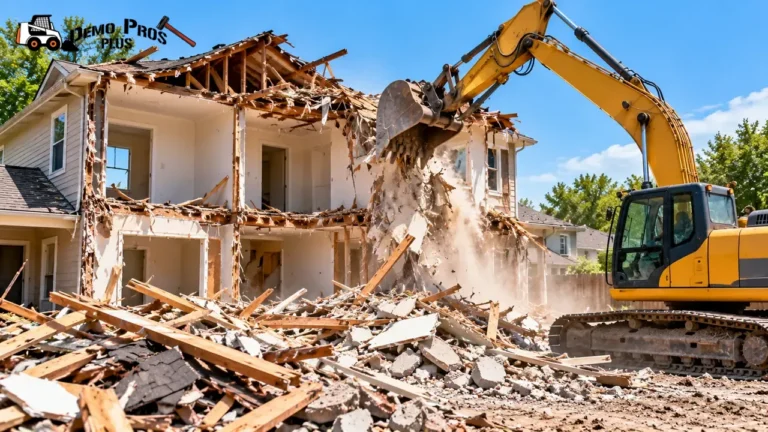
Roof and walls are stripped off first. Operators collect concrete, wood and metal on piles as they do. All are wet with water trucks or hoses to keep the dust down. The foundation comes last. Slabs get broken and loaded out. Footings get dug up unless your plans keep them. Was a fire or storm the reason for the teardown? Read our guide to emergency demolition in Corona. Still pricing the job? The house demolition cost guide for Corona covers budgeting.
| Tip: Take photos of the lot from four directions on the day of the final truck departure. Dated photos settle arguments about final grade and help later with the assessor. |
House Demolition Site Cleanup: What Stays and What Goes
A well cleaned house demolition site will contain nothing above grade other than items you decided to keep. Debris includes nails, glass and broken wire. Typically, a magnetic sweep and hand rake pass are completed. Bare feet and dog paws look for what the excavator missed.
| Item | Typical outcome | Confirm before sign-off |
|---|---|---|
| Concrete slab | Broken up and hauled or crushed | No pieces left under the surface |
| Footings | Dug out or left by agreement | A written note if they stay |
| Driveway and walkways | Removed or kept | Kept areas marked in the contract |
| Sewer and water lines | Capped at the property line | The cap inspection record |
| Gas and electric | Disconnected by the utility | The shutoff confirmation |
| Trees and shrubs | Protected or cleared by scope | Named trees to save in writing |
| Pool or spa | Demolished under its own permit | The engineer’s compaction report |
A recent City of Corona demolition bid requires demolition permits and sewer and water cap approvals and a completion letter before the contractor gets paid. Private owners can ask for the same paperwork. It shields the property after house demolition in Corona, CA from surprise repair bills later.
House Demolition Debris Removal and the 65 Percent Recycling Rule
Demolition projects must be covered under the California green building code and will be required to recycle and reuse at least 65 percent of the nonhazardous materials. Check with Corona’s Building Division to see if your permit is subject to the rule. CalRecycle explains that CALGreen sets the 65 percent target for permitted demolition. In practice, house demolition debris removal comes down to sorting. Concrete gets crushed into base rock.
Clean lumber goes to chippers. Metal heads to scrap yards. Roofing and pressure treated wood need separate handling and mixed loads cost the most to dump. Ask for weight tickets from every facility that took a load. Those tickets are how a contractor proves a diversion rate. Burning leftovers on site is off the table since Corona code and SCAQMD Rule 444 prohibit open burning.
Property Cleanup After Demolition Starts With Hazards Found Beforehand
Hazards get handled before any machine touches the house.SCAQMD Rule 1403 mandates that an asbestos survey be performed by a certified consultant, and asbestos be removed prior to the start of demolition.
The South Coast Air Quality Management District also requires notice to be sent at least 10 work days prior to the beginning of the demolition. The city then asks for proof of that notice before issuing the demolition permit. Corona sits inside the district so none of this is optional.
Asbestos Surveys and Lead Paint Requirements
Asbestos may be present in homes constructed before the 1980s in the floor tile or ceiling texture. Old paint can contain lead. The ability to document both is essential to solid property cleanup after demolition and this is a factor in a contractor’s ability to do so. If crews hit unexpected material mid-job, the contingency plan filed with the notice takes over. Work pauses until that plan is followed.
Dust Control During Demolition and Property Cleanup
Dust is the second hazard. Rule 403 requires dust control during demolition and grading. Fall Santa Ana winds can carry fine particles from a bare lot into a neighbor’s yard. Wetting the ground and the piles on dry windy days keeps the dust on your side of the fence.
| Tip: Request the asbestos survey report and the SCAQMD notification confirmation. The city must have evidence of the notice for them to issue a permit. |
Property After House Demolition in Corona, CA: Local Rules That Shape the Lot
Demolition schedules, pool removal, contractor licensing, permits and post demolition lot safety are all influenced by local permits in Corona.
Construction Noise Restrictions
Construction noise is prohibited from 8 pm until 7 am Monday to Saturday and from 6 pm to 10 am Sunday and federal holidays. Delivery trucks count as construction noise under the city bulletin.
Pool Removal and Soil Compaction
Pools follow separate rules. According to the builder’s advisory, “An abandoned pool is like a poorly draining bowl in the city. When the backfill is loose, it becomes saturated soil and then compacts when a new patio or room is constructed. The city requests a stamped compaction report from an engineer. Please contact the Utilities Department (951) 736-2234 before draining.
Contractor License Verification
Check your contractor’s license too. California’s C-21 class covers building moving and demolition. The number can be verified on the state contractors board site.
Demolition Permits and Office Hours
Permits are available at the Building Division, 400 S. Vicentia Avenue. City Hall is closed on Fridays; plan permit visits for Monday-Thursday.
Fire Safety and Weed Abatement
Fire season is also present near the foothills’ edges of lots near Corona. Inquire with the fire department on weed abatement before leaving a cleared parcel of land unattended.
House Demolition Site Restoration: Seven Steps From Rubble to Graded Lot
House demolition site restoration involves filling voids, compaction and grading for drainage. This work is to be completed when the inspector accepts the ground.
- Confirm every utility is capped and tagged before grading starts.
- When removing slabs and footings, do so within the footprint unless the plans include them.
- Place approved material in thin layers in pits, trenches and pool holes.
- Pack each lift and test if a new build is going to be made.
- Rough grade outside to get water to run off to neighbors’ streets or approved water drainage.
- Before winter rains, cover bare soil with straw wattles or hydroseed because Corona’s rain comes in a few heavy storms.
- Book the final inspection and keep the completion letter.
| Pro Tip: Hand your soil engineer’s backfill specs to the demolition crew before work starts. Fill placed without those specs often gets dug out again for the new foundation. |
Mistakes Owners Make Once the Walls Come Down
Leaving the foundation for later costs the most. Buried slabs and footings hide cracks and debris. Engineers and lenders often ask for them to be removed before a rebuild anyway.
- Skipping the permit closeout comes next. An open demolition permit can stall a new building permit and the assessor’s update. Get the final inspection sign-off and a completion letter in hand.
- Vacant land brings liability. An unfenced hole or exposed rebar invites trespassers and puts the liability on the owner. A cleared lot still needs a fence and a lock on the gate.
- Handshake scope is the last trap. Trees and block walls and driveways need names in the contract. Shared walls deserve a line about who owns what. Disputes over the property after house demolition in Corona, CA nearly always trace back to one missing sentence in the agreement.
Property Taxes and Selling a Cleared Lot
Demolition removes the building from your assessed value but the land value stays. Notify the Riverside County assessor in writing so the change gets recorded. Under Proposition 13 the land generally keeps its existing base year value while the improvement value comes off. A voluntary teardown usually lowers the bill at the next assessment cycle and not mid-year. Send the permit and a dated photo with your notice.
Zoning shapes how buyers see the lot. Residential builders pay for ready land. Commercial buyers often plan to demolish on their own. The timing of a sale is also important as sales are the least active between November and January.
Five Decisions to Make Before the Excavator Arrives
Settle five points in writing first. They decide whether the lot sells fast or builds fast.
Rebuild or renovate
A full teardown suits a failing structure. Partial demolition keeps sound sections and a rebuild can wait on your financing.
Utility plans
Decide whether the sewer lateral and water meter stay. Reusing capped lines can save trenching.
Boundary protection
Mark fences and block walls and sprinkler lines. Neighbors notice damage before you do.
Soil and foundation plan
Share any geotechnical report with the crew. Backfill specs change how the lot gets filled.
Paper trail
Collect weight tickets and cap records and the final inspection sign-off. Buyers and lenders ask for them.
Talk With a Licensed Corona Demolition Crew
A Corona homeowner who is looking to have their home demolished and all the debris hauled away and the location cleaned up can rely on the services of Demo Pros Plus.
Call us at 714-605-1651 or send an e-mail to Mike@demoprosplus.com and let us know what your particular situation is. The company is licensed under CSLB #1016454 and has 27+ years of experience in each cleared lot.
Straight Answers on Teardowns and Cleared Lots
Owners ask the same handful of questions once the house is gone. For instance a homeowner with a 1960s ranch and a backyard pool might wonder if the rubble can simply fill the pool. It can’t. The city requires a permit, approved fill and a compaction report for that property after house demolition in Corona, CA.
What does it cost to demolish a 2000 sq ft house?
The cost to demolish a 2000 sq ft house typically ranges from $8000 to $34000. The national average sits near $15000 to $20000 or roughly $4 to $17 per square foot. Asbestos work and access and debris type move the number.
Are you legally allowed to destroy your own property?
Yes. You can generally destroy personal property you solely own if you break no other laws. Real estate carries limits though. A house in Corona still needs a demolition permit and an SCAQMD notice first.
What is the hardest month to sell a house?
December and January are typically the slowest and lowest-priced months. November also ranks among the hardest. Real estate data from sources like Bankrate and Hommati shows the same pattern.
Can I claim an abandoned house in California?
Yes but you cannot simply walk in and take it. You must complete a strict legal process such as adverse possession or a formal court action. Adverse possession generally requires five years of continuous possession and payment of property taxes.
How long does it take to demolish a 3 bedroom house?
The physical knock-down of a standard 3 bedroom house takes one to three days with mechanical equipment. The complete project takes two to eight weeks. Permits, utility disconnections and cleanup fill that gap.
What needs to be removed from a house before demolition?
You must remove personal belongings, architectural salvage, hazardous materials and utility connections. Asbestos has to come out before demolition under Rule 1403. Ask your contractor for the survey report.
What is the next step after demolition?
The next phases are site cleanup, land preparation and rebuilding the foundation. Grading and compaction come first. Your engineer then confirms the ground can carry the new structure.
Colclusion
The property after house demolition in Corona, CA is finished once four things are true: every utility is capped, pits and trenches are filled and compacted, the lot is graded so water runs to the street or approved drainage, and the city has closed the permit. Bare dirt alone doesn’t count. A leftover slab or a loose-filled pool hole usually traces back to something nobody wrote into the contract.
Put the scope in writing before the excavator shows up. List the trees, block walls and driveway you’re keeping. Collect the asbestos survey, the SCAQMD notice, weight tickets from every facility and the final inspection sign-off as the job moves along, since buyers and lenders will ask for them. Then send the Riverside County assessor a written notice with a dated photo so the building value comes off your bill.
Sources
- CalRecycle, C&D Diversion Guide: https://calrecycle.ca.gov/lgcentral/library/canddmodel
- SCAQMD, Rule 1403 Notification: https://www.aqmd.gov/home/regulations/compliance/asbestos-demolition-removal/r1403-web-app
- City of Corona Building Division, Construction Noise Permitted Work Hours: https://coronaca.gov/home/showpublisheddocument/19866/637497770686230000