
Summarize with
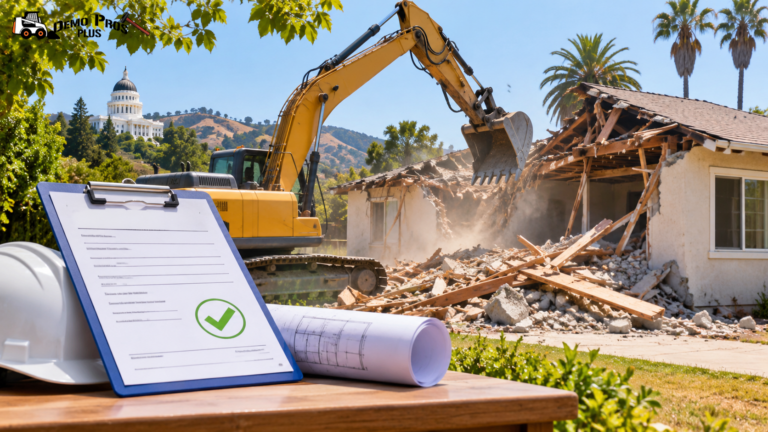
Before a California home can come down, the owner usually needs an approved house demolition permit from the local building department. That approval confirms the project has addressed utilities, hazardous materials, site safety, debris disposal, and the condition of the lot after the structure is gone.
Demo Pros Plus has spent more than 27 years helping California property owners plan demolition work the right way. Our full house demolition services in Corona, CA support homeowners from the first site review through debris removal and final cleanup. This guide explains the permit process in plain language, including what cities ask for, what it costs, and how to avoid delays that can stall a rebuild.
What a House Demolition Permit Covers
A demolition approval is specific to the structure, address, and scope listed on the application. It is not a blanket permission to clear the entire lot, remove every slab, demolish a pool, or begin construction on a replacement home.
A typical approval may cover:
- Removal of the main dwelling
- Demolition of listed accessory structures, such as a garage or shed
- Foundation removal only when it is included in the approved scope
- Debris removal, hauling, and legal disposal
- Dust control, erosion control, and site safety
- Required inspections during and after the work
- Final site grading and cleanup
It usually does not cover a new house, addition, pool, retaining wall, driveway, or major grading. Those projects often need their own applications, plans, and inspections.
Why California Requires Approval First
California treats demolition as a construction activity because it affects public safety, utilities, neighboring properties, air quality, and the future use of the land. The state building standards code requires a separate permit before a building or structure is demolished, while each city and county adds local review requirements.
The review protects more than the property owner. It helps ensure that gas and electric lines are controlled, asbestos is identified before disturbance, debris goes to an approved facility, and the lot is left in a safe condition.
| Tip: Ask the building department for the current checklist for your exact address before ordering surveys or plans. Two nearby cities can require different documents for nearly identical houses. |

House Demolition Requirements in California
Every jurisdiction has its own process, but most California projects follow the same basic path. The owner or contractor submits project details, clears outside agency requirements, receives approval, completes inspections, and closes the permit after cleanup.
Common house demolition requirements include:
- Proof of ownership or signed owner authorization
- A completed city or county application
- A site plan showing structures, property lines, access, and items that will remain
- Contractor license, insurance, and contact information
- Utility disconnect confirmation or scheduled disconnect dates
- Asbestos survey, abatement records, or required air district notification
- Debris hauling and recycling plan
- Sewer cap or septic abandonment approval when applicable
- Final inspection after the site is cleared
The California Contractors State License Board advises property owners to contact the local building department because permit requirements differ by city and county. That local review is why a permit that works in one city may not match the requirements in the next.
Application for a House Demolition Permit
Start with the building department for the city or county where the property sits. Many jurisdictions accept online applications, but some require signed plans, in person filing, or separate clearances from planning, fire, public works, or environmental agencies.
For a related project, our roof demolition cost guide for California explains why partial demolition needs a clearly defined scope before permits and pricing can be accurate.
A complete application for a demolition permit usually includes:
| Step | What You Provide |
|---|---|
| Confirm jurisdiction | Property address, city or county, and scope of work |
| Submit ownership details | Owner name, contact information, and authorization if applicable |
| Describe the project | Structures to be removed, foundations, slabs, and items staying in place |
| Provide a site plan | Property lines, structure footprint, access route, fencing, and demolition limits |
| Document utilities | Disconnect letters, appointments, or confirmation from each provider |
| Address hazardous materials | Asbestos survey, abatement records, or air district notification |
| Pay required fees | Application, plan review, inspection, and disposal related charges |
| Schedule inspections | Pre demolition, utility, and final inspections as required |
| Close the permit | Final approval after debris removal and site restoration |
Do not begin structural work based on a verbal conversation or an email that says a project “looks fine.” Keep the approved permit, stamped plans, inspection cards, and utility documentation at the site until the final inspection is complete.
Asbestos, Utilities, and Site Safety
The most common permit delays come from hazardous materials and utilities, not from the physical teardown. These steps should be completed or scheduled before an excavator arrives.
Many California air districts require an asbestos survey before demolition. In parts of Southern California, the sequence commonly includes an asbestos survey, required removal, air district notification, and then the building department demolition permit.
Utilities also need to be controlled before work begins. California workplace rules require utility companies to be notified and service to be shut off, capped, or otherwise controlled at the building or curb line before demolition starts, unless a service is specifically needed during the work.
| Requirement | Who Usually Handles It | Why It Matters |
|---|---|---|
| Gas disconnect | Utility provider or licensed trade | Prevents fire and explosion risks |
| Electric disconnect | Utility provider or licensed electrician | Prevents electrocution and equipment damage |
| Water shut off | Utility provider or plumber | Prevents flooding and pressure hazards |
| Sewer cap | Licensed plumber or demolition contractor | Prevents sewer gases and blockages |
| Asbestos survey | Certified asbestos consultant | Identifies regulated materials before disturbance |
| Structural review | Qualified demolition professional | Identifies collapse risks and removal sequence |
| Debris disposal | Licensed demolition contractor | Ensures legal hauling and recycling where possible |
OSHA also requires an engineering survey by a competent person before demolition begins. That survey evaluates the structure’s condition and the potential for unplanned collapse.
| Tip: An inactive utility account does not always mean the line is safe. Request written confirmation that gas, electric, water, and sewer services have been disconnected, capped, or properly protected. |

Demolition Permit Cost in California
Most homeowners should plan on $500 to $3,000 for demolition permit fees. Larger homes, hillside lots, historic review, or multiple agency approvals can push the cost higher, while a small detached structure may cost less.
The permit is only one part of the budget. Surveys, abatement, utility coordination, hauling, and site restoration are often billed separately.
| Cost Item | Typical California Range |
|---|---|
| Demolition permit fees | $500 to $3,000 |
| Plan review or administrative fees | $100 to $1,000 |
| Asbestos survey | $500 to $2,000 |
| Asbestos abatement, if needed | $2,000 to $20,000 or more |
| Utility disconnect coordination | $0 to $1,500 |
| Sewer cap or septic abandonment | $500 to $5,000 |
| Debris hauling and disposal | Included in demolition quote or billed separately |
| Full house demolition | $15,000 to $50,000 or more |
These are planning estimates. A small single story home with clear access costs far less than a two story house on a tight hillside lot. Underground tanks, thick concrete, poor soil access, asbestos, and long hauling distances can all raise the final number.
Demolition Permit Checklist
Use this checklist before booking equipment or setting a teardown date. A missing document can delay approval or trigger a stop work order after the project has started.
- Confirm the correct city or county building department
- Verify ownership and obtain owner authorization if needed
- Identify every structure, slab, foundation, fence, or accessory building in the scope
- Order a site plan showing demolition limits and access
- Check for zoning, historic, coastal, or planning review requirements
- Schedule an asbestos survey and any required air district notification
- Arrange gas, electric, water, and sewer disconnects
- Call 811 before excavation or utility locating work
- Confirm debris hauling, recycling, and disposal arrangements
- Plan fencing, dust control, erosion control, and site access
- Schedule required inspections
- Keep approved plans, permits, and reports on site
- Request final inspection and permit closure after cleanup
Demolition Notice Requirements
Depends on the city, utility provider, air district, and project conditions. Some notices apply before work starts, while others are required before a specific utility can be disconnected or a dumpster can be placed in the street.
Common notices include:
- Air district asbestos demolition notification
- Utility disconnect requests and written confirmation
- Neighbor notification when local rules require it
- Public works or encroachment notice for street closures, equipment, or dumpsters
- Historic review notice for protected properties or designated districts
- Sewer or septic agency notice before capping or abandonment
Ask the building department which notices apply to your address. A permit approval letter may list conditions, but it does not always include every requirement from an outside agency.
How Long Does Approval Take?
A straightforward residential permit can be approved in days, while a project with environmental or planning review can take weeks. The physical demolition is often the shortest part of the entire process.
| Project Type | Typical Permit Timeline |
|---|---|
| Detached garage or shed | 3 to 10 business days |
| Standard single family home | 1 to 4 weeks |
| Home requiring asbestos clearance | 2 to 6 weeks |
| Hillside, coastal, or historic property | 4 to 12 weeks or more |
| Project needing multiple agency approvals | 6 to 12 weeks or more |
Start the approval process before scheduling a demolition date. Utility appointments, asbestos removal, inspections, and disposal scheduling can all affect the timeline.
What Happens Without Approval
Demolishing without approval can create expensive problems even if the work itself was done safely. The city may issue fines, halt the project, require retroactive review, or delay approval for a future rebuild.
Possible consequences include:
- Citation and fines
- Stop work order
- Delayed rebuilding permit
- Required engineering or environmental reports after the structure is gone
- Utility reconnection complications
- Difficulty closing the project with the building department
- Problems during a future property sale
If work has already started without approval, stop and contact the building department immediately. A licensed demolition contractor can help determine the safest way to bring the project back into compliance.
FAQs
What needs to be removed from a house before demolition?
Personal belongings, hazardous materials, refrigerants, propane tanks, batteries, chemicals, and any items you want to salvage must be removed first. Utilities must also be disconnected, capped, or protected, and required asbestos abatement must be completed before structural demolition begins.
Can I demolish a house myself?
A homeowner may be allowed to demolish an owner occupied house in some California jurisdictions, but permits, utility disconnects, asbestos requirements, and safety rules still apply. Most homeowners hire a licensed demolition contractor because the work involves heavy equipment, structural risk, and regulated disposal.
How much is a permit to demolish a house?
In California, a house demolition permit often costs between $500 and $3,000, depending on the city, project size, plan review, and required clearances. Asbestos surveys, utility work, sewer capping, and disposal fees are usually separate.
What can a homeowner do without a permit in California?
Minor work such as painting, basic landscaping, and some small repairs may not require a permit, but rules vary by city and county. Demolition of a house or structure generally requires a permit, and partial demolition often requires a building permit as well.
Does Demo Pros Plus handle the permit process?
Demo Pros Plus can help homeowners understand local requirements, prepare project information, coordinate utility and disposal steps, and support the permit process. Final approval authority always rests with the local building department and other applicable agencies.
Do you remove the foundation too?
Yes, foundation removal can be included when it is part of the approved scope. Some projects leave the foundation in place, so confirm the desired end condition before the permit and demolition plan are finalized.
Do you serve areas outside Corona?
Yes. Demo Pros Plus serves Corona and nearby Southern California communities. Availability depends on project size, location, and scheduling, so calling early is the best way to reserve a crew.
How long does a house demolition take?
A typical single family home demolition can take one to three days once permits, utilities, asbestos clearance, and site access are ready. Permit approval, abatement, and inspections often take longer than the physical teardown.
Do you recycle demolition debris?
Yes. Concrete, metal, wood, and other acceptable materials are separated for recycling whenever local facilities and project conditions allow. California projects may also need to meet local construction and demolition diversion requirements.
What should I do before requesting a demolition quote?
Have the property address, photos, structure size, access details, utility information, and desired end condition ready. Let the contractor know whether the foundation, driveway, pool, shed, or other structures should be removed.
Conclusion
A house demolition permit is the first major milestone in a California teardown, not a formality to handle after the equipment arrives. It confirms that the city or county has reviewed the structure, utilities, hazardous materials, site safety, and disposal plan before work begins.
The smoothest projects follow the same order: confirm local rules, complete asbestos and utility steps, hire a licensed contractor, schedule inspections, and keep every approval record until the permit is closed. That sequence protects your budget, your timeline, and your ability to build on the lot later.
Planning Your Demolition Project Today
Demo Pros Plus can help you understand the permit steps, prepare the site, and complete the demolition safely. Call 714-605-1651 or email Mike@demoprosplus.com for a clear project estimate.
Sources
- California Contractors State License Board: Building Permit Requirements: Explains that California requires a separate permit before a building or structure is demolished and directs owners to their local building department for local requirements.
- OSHA: Demolition Overview: Explains federal demolition safety requirements, including the need for an engineering survey by a competent person before demolition work begins.